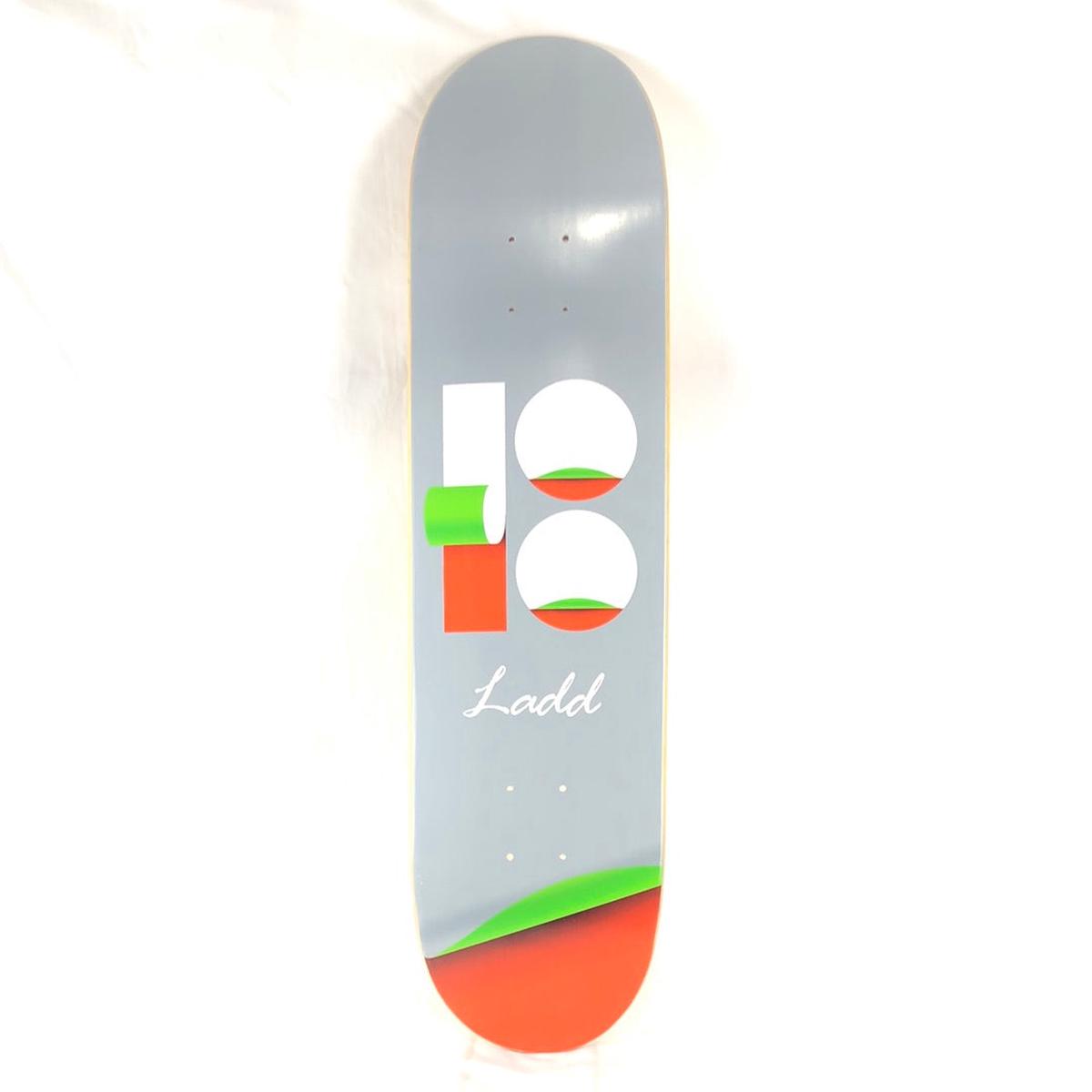

Crail Alien Painting Assorted Colors 8.0 Skateboard Deck
$50.00$100.00

EDA Rondo Artistic Roller Skate Boot
The Rondo is a Classic model whichreplace the (Preludio).Construction: Soft (35)Perfect from beginner to competitionBest for: FreestyleGood for: DanceOk for: Figure
EDEA Rondo:
The Edea Rondo is the Beginning Competitive Skating Boot for Freestyle and Figures.
The Rondo is ultra-light and very soft roller construction with a beautiful leather finish outside and perforated MicroFibre Lining. The Edea Rondo is made with Revolutionary NEW Ultra Lightweight Materials which means that the Rondo is 25% to 45% lighter than comparable Skating Boots. The Rondo is designed for the Beginning Competitive Roller Freestyle and Figure Skater and is incredibly comfortable.Soft Roller Boot Construction 35Size: 195 to 310 in 5 MM increments available in Full and Half sizes
Color: Ivory White, and Ivory Black
Training Level: Entry level Freestyle, Single Jumps and Axle as well as Figure
Comfort level: Very comfortable for beginner and competitive skating.
Edea Rondo Spec:
Soft Roller Boot Construction 35Size: 195 to 310 in 5 MM increments available in Full and Half sizesColor: Ivory White, and Ivory BlackTraining Level: Entry level Freestyle, Single Jumps and Axle as well as FigureComfort level: Very comfortable for beginner and competitive skating.
EDEA Sizing Chart:
Skaters often choose boots by matching their standard shoe size with what they believe
is the equivalent size in skates.
Unfortunately these two sizing systems do not always correspond exactly, because each
manufacturer has its own measuring type, and also because standard shoes, which require
the foot to bend, are usually longer than skates.
For these reasons we recommend that you always choose the size of your boots based on a
real measurement, the length of the foot, matching this to the inner length of the boot.
For purely illustrative purposes only, below we have provided a table comparing sizes
in MILLIMETERS to the different scales of sizes relative to standard shoes.
DRAWING ROUND YOUR FOOT.
Sit down and place one "A4" sheet under each foot.
The leg (the part of the lower limb that lies between the knee and the ankle) must be
perpendicular to the floor without any inclination.
Ask another person to help you by tracing the outline of your feet using a ballpoint pen that
must be kept close to the foot and in an upright position.
Without moving your feet, stand up and repeat the operation. This drawing should be larger
than the first one as it shows the outline of the foot under pressure.
Then, with a ruler, draw a line on each sheet between the extreme points of tip and heel.
Using the ruler, measure this distance precisely in centimeters.
This is the size of your feet.
If you are used to wearing close-fitting shoes, we recommend that you try this size on.
It is common to leave a small space at the tip, to facilitate the movement of the toes.
BE CAREFUL!
Note: when using this method, the thickness of the pen tip could add up to 5 mm to the actual length of the foot.